
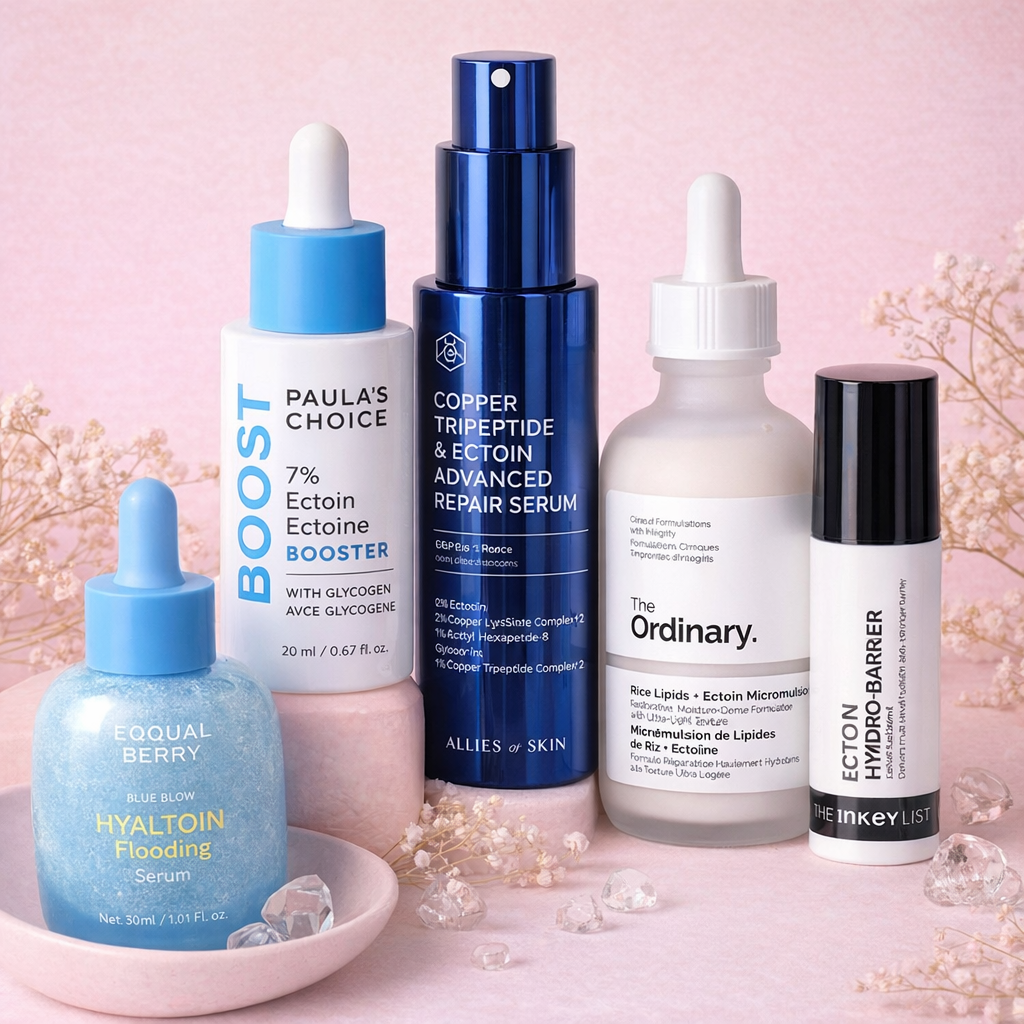
After years of chasing actives that exfoliate, peel, brighten, and occasionally offend my skin barrier, I realised…
Maybe my skin doesn’t need more drama.
Maybe it needs protection first.
That’s when I kept seeing one quiet little ingredient popping up in derm formulas and sensitive-skin products: Ectoin.
Not scary like acids.
Just… suspiciously calm.
So naturally, I went down the science rabbit hole and I will break down this ingredient for you.
What is Ectoin?
Ectoin is a natural molecule made by extremophile bacteria. Yes. Bacteria. Stay with me. These microorganisms survive in:
- deserts
- salt lakes
- freezing temperatures
- UV radiation
Basically places your skin would file a formal complaint about.
To survive, they produce Ectoin to protect their cells from stress and dehydration. Scientists discovered that when applied to human skin, it does something similar: it helps shield, hydrate, and stabilise skin cells. Think: tiny bodyguard for your barrier.
What does Ectoin actually do for skin?
Here’s where it gets interesting. Ectoin works through something called “extremolyte protection.” In simple terms: it binds water molecules around cells and forms a protective hydration shell. So instead of just adding moisture temporarily (like glycerin), it helps lock in cellular stability.
Research shows it can:
- Reduce transepidermal water loss (TEWL)
- Strengthen the skin barrier
- Calm inflammation
- Protect against UV and pollution stress
- Improve dryness + sensitivity
- Some studies even suggest it reduces photoaging damage caused by environmental stress.
Here’s what that actually looks like in real life:
- Deep hydration (without heaviness): Skin feels plump and comfortable, not greasy.
- Calms irritation fast: Great for redness, over-exfoliation, or “I tried too many actives again” moments.
- Barrier repair: Helps your skin act like skin again instead of tissue paper.
- Environmental protection: Pollution, wind, UV, air-con, Ectoin helps buffer all of it.
- Works with everything: No conflicts. No pilling. No drama.
Honestly? The most unproblematic ingredient in my routine.
Who is Ectoin best for?
Almost everyone, but especially people with:
- sensitive skin
- rosacea-prone skin
- eczema-leaning skin
- post-retinol or post-acid irritation
- dry/dehydrated skin
- anyone living in harsh climates
- people who want “glass skin” without using 14 moisturising serums
- If your skin barrier is damaged, Ectoin will be your saving grace.
How to use Ectoin in your routine
It’s super flexible.
You can incorporate it into any step of your skincare routine because you can find it in:
- serums
- toners
- moisturisers
- sunscreens
Use it: morning and/or night
Pairs well with actives to reduce irritation and barrier support. It layers beautifully with:
- retinoids
- vitamin C
- exfoliating acids
- niacinamide
Translation: it’s the friend that gets along with everyone at the party.
Typical concentrations are 0.3% -2%, but can go as high as 7%.
Final Thoughts
Ectoin isn’t viral or extreme in comparison to other skincare trends.
It won’t tingle.
It won’t peel.
It won’t “purge your toxins” or whatever marketing says this week.
What it will do is make your skin feel: calmer, stronger, and less reactive. And honestly? That’s way more impressive. Because good skin isn’t about attacking it harder. It’s about protecting it better.
Ectoin is quiet luxury skincare energy. Low drama. High results. Exactly my vibe.
This blog is for informational purposes only and does not replace professional dermatological advice. Individual skin responses may vary.