file 0000000093507209ad920201a9bed93d (1)
Today we’re diving into the Nanoleaf LED Light Therapy Face Mask: what it does, how it works, and whether it deserves a spot in a serious, results-driven skincare routine.
 
This is not hype. This is evidence, practicality, and a little humour because isn’t that what life is all about.

What Is LED Light Therapy (And Why Should You Care)?
LED (Light Emitting Diode) therapy uses specific wavelengths of light to target different skin concerns. This isn’t new. Dermatology clinics have used light therapy for years to treat acne, inflammation, and signs of ageing. Different wavelengths penetrate the skin at different depths, triggering biological responses.
 
LED light therapy works through a process called Photobiomodulation, where specific wavelengths of light are absorbed by cellular components known as chromophores. In the skin, one of the key targets is Cytochrome C Oxidase within the Mitochondria. When red or near-infrared light penetrates the skin, it enhances Mitochondrial activity and increases Adenosine Triphosphate (ATP) production, essentially boosting the cell’s energy currency. With more ATP available, Fibroblasts function more efficiently, leading to increased collagen and elastin synthesis. At the same time, red light has been shown to modulate inflammatory pathways and reduce oxidative stress, both of which contribute to visible improvements in skin texture, firmness, and overall resilience. The result isn’t magic; it’s improved cellular performance translating into gradual structural changes in the dermis.
 
Blue light works through a different, highly targeted mechanism. It interacts with Porphyrins produced by Cutibacterium acnes bacteria. When these Porphyrins absorb blue light, they generate reactive oxygen species that selectively damage the bacterial cells without harming surrounding tissue. This reduces bacterial load and helps calm inflammatory acne lesions.
 
Other wavelengths, such as yellow or near-infrared, may influence microcirculation and cytokine signaling, further supporting wound healing and redness reduction.
 
Importantly, LED therapy does not ablate, burn, or physically disrupt the skin barrier, which is why it carries minimal downtime compared to lasers or aggressive resurfacing treatments. The improvements come from biological modulation rather than controlled injury, making consistency and cumulative exposure the key drivers of visible results.
 
Consistency matters more than intensity with LED therapy. Most studies show best results with regular use over several week, don’t expect an overnight transformation.
17716682769212819641750610495205

How the Nanoleaf Mask Works

LED Configuration & Coverage
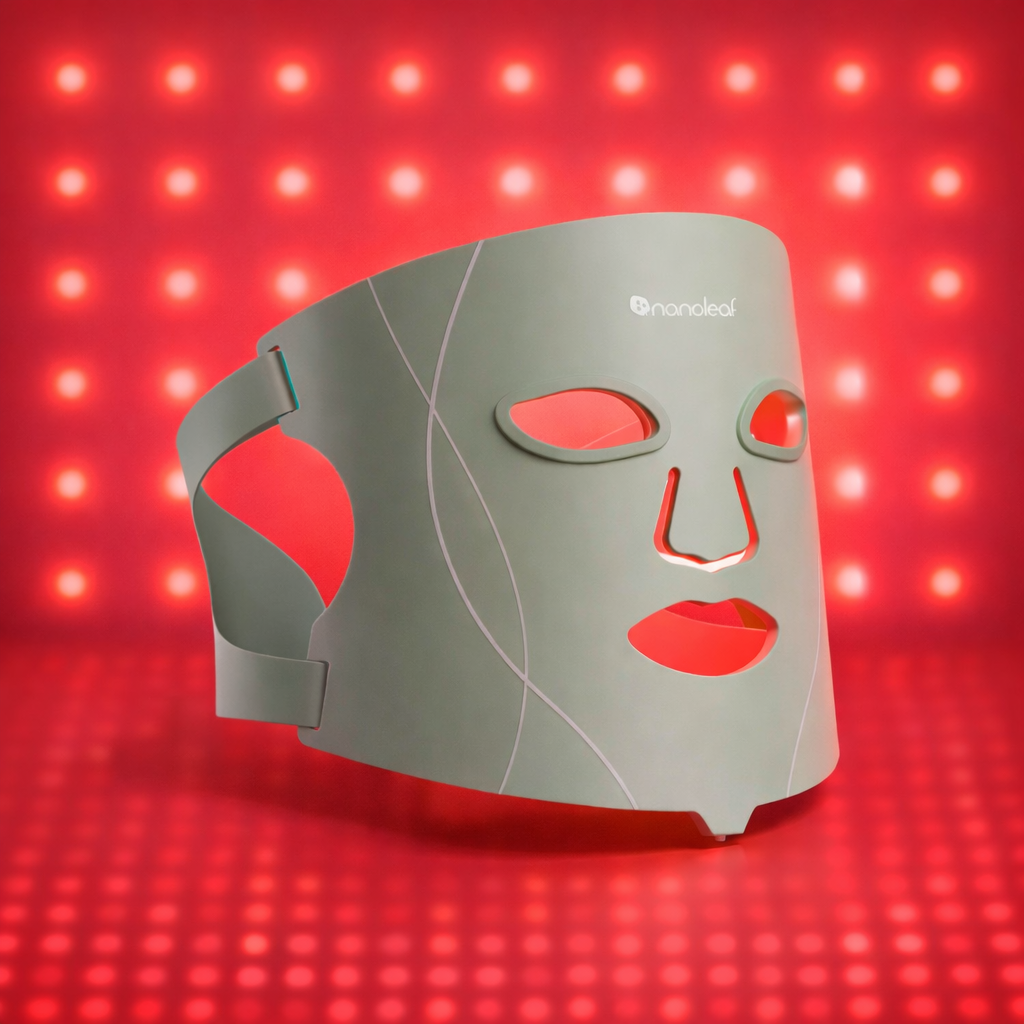
The mask contains 108 LED bulbs with a total of 432 individual LED chips arranged across the facial surface to ensure even light exposure and minimal shadowing. The use of over 300 LEDs (rather than just a few high-powered diodes) improves coverage and consistency in light delivery, an important factor because uneven light dosing can lead to inconsistent biological effects on the skin. 
 
Each LED bulb emits a combination of wavelengths, pairing visible light with Near Infrared (NIR) at ~850 nm, which is intended to penetrate deeper into tissues than visible light alone. The device integrates RGB + IR LED technology commonly used in biomedical Photobiomodulation devices due to its ability to target multiple layers of skin and cellular pathways. 
 
Wavelengths & Therapeutic Ranges
The Nanoleaf mask’s light outputs span 7 discrete wavelengths:
  • Red: ~640 nm + NIR 850 nm. Often linked with stimulating mitochondrial activity and collagen production.
  • Blue: ~460 nm + NIR 850 nm. Generally used for targeting bacteria associated with breakouts.
  • Green: ~525 nm + NIR 850 nm. Commonly marketed for pigmentation and calming redness. 
  • Cyan: ~460 nm + 525 nm + NIR 850 nm. Combines blue and green light. Commonly marketed for healing and calming inflammation. 
  • Yellow: ~640 nm + 525 nm + NIR 850 nm. Combines red and green light. Commonly marketed for evening skin tone and reducing redness. 
  • Purple: ~640 nm + 460 nm + NIR 850 nm. Combines red and blue light. Commonly marketed for reducing acne breakouts and acne scars. 
  • White: ~640 nm + 525 nm + 460 nm + NIR 850 nm. Combines red, green and blue light. Commonly marketed for enhancing nutrient absorbption.
These specific wavelengths are within ranges often cited by manufacturers for biological effects, though independent clinical evidence for every combined mode (especially green, cyan, yellow, or purple) isn’t as robust as it is for core clinical wavelengths like ~630–660 nm red and ~830–850 nm NIR. 
 
Power Density & Intensity Controls
The device also provides power densities between ~78–103 mW/cm² across modes, and five intensity levels per mode. Power density (irradiance) and total session energy are key parameters for effective Photobiomodulation, too low and skin cells won’t receive enough energy to respond, too high and it could become inhibitory. The fact that this mask specifies irradiance figures (rather than generic brightness) is a positive indicator of thoughtful engineering relative to many consumer LED devices that don’t disclose these details.
 
Battery, Use & Safety
It’s powered by a rechargeable battery (~2500 mAh), with typical sessions recommended for 5–10 minutes per treatment and up to roughly 80 minutes total use per charge. The inclusion of NIR (not visible to the eye) means the mask delivers energy below the surface of the epidermis where deep-tissue Photobiomodulation processes are theorised to be effective.
 
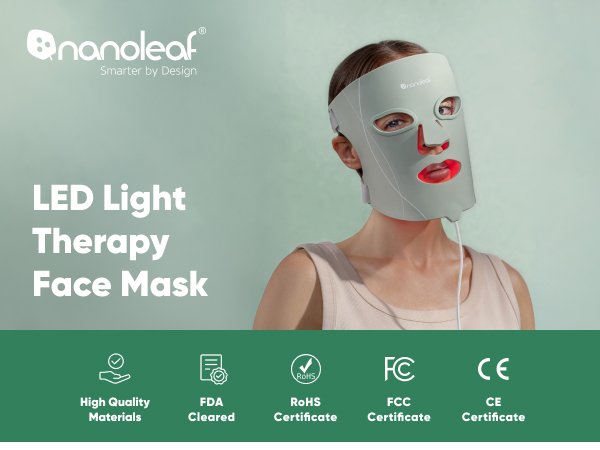
It is FDA cleared and medical grade. 
 
It is very easy to use:
You wear it.
You sit still.
You glow like a responsible adult.
 
Timed sessions to prevent overuse. The mask is comfortable while on but taking it off an on can be a hassle as the mask is held on by Velcro straps which is not conducive of a luxurious and calming aura.
 
Clinical Support
  • Wavelength selection includes clinically relevant red and NIR ranges that can stimulate collagen and cellular bioactivity.
  • LED number & distribution helps provide consistent coverage, which improves the likelihood of measurable results compared with masks that have sparse diode placement.
However, it’s important to recognise that some of the visible wavelengths (e.g., green) have less robust clinical backing for the specific skin outcomes claimed, and the exact therapeutic efficacy depends on regular use and individual response.

Suitability

LED therapy is supported by clinical research — but like all skincare, results depend on consistency, skin type, and realistic expectations.
 
Who Is This Mask For?
Be honest with yourself here. This device makes sense if:
  • You’re committed to long-term skin improvement
  • You prefer non-invasive treatments
  • You want something lower irritation than strong actives
  • You value convenience at home
It may not be ideal if:
  • You want dramatic, instant results
  • You struggle with routine consistency
  • You have light-sensitive conditions (always consult a professional first)
Skincare tools only work if you actually use them. A mask in a drawer is just an expensive Halloween prop.
 
If you’re serious about barrier-friendly, evidence-supported skin treatments and you’re willing to commit to routine use, it’s a strong contender.
It won’t replace sunscreen.
It won’t fix poor sleep.
It won’t emotionally heal you.
But it can be a valuable addition to a well-structured skincare routine.

My Results

There are many other LED face masks on the market that are impressive, some offer higher irradiance outputs, more clinical backing, hard shell mask designs, or even more targeted wavelength pairings. Some premium devices may outperform the Nanoleaf in specific technical metrics. But here’s the reality: effectiveness doesn’t always require the most expensive or most hyped option. I chose the Nanoleaf mask because it delivers clinically relevant red, blue, and near-infrared wavelengths, has solid LED coverage, and provides controlled dosing, all at a price point that is significantly more accessible than many competitors. It may not be the most elite device in the category, but it sits comfortably in the “strong enough to get the job done without financially traumatising me” range. And in skincare, a device you can afford and use consistently will always outperform a luxury one that lives in your wishlist.

I’ll be documenting my experience with this specific mask below and updating this section every month to provide transparent, real-world results.
2 Week Update
  • Frequency of use: 5 times a week for 7minutes alternating between red and yellow light
  • Noticed changes: N/A
  • Overall thoughts: Easy to incorporate into my routine, no visible changes to my skin but that is to be expected. 
Month 1 Update
(To be updated)
 
Month 2 Update
(To be updated)
 
… 
 
I’ll continue returning to this blog monthly with progress updates, including honest positives, negatives, and whether it continues to earn its place in my routine.

This blog is for informational purposes only and does not replace professional dermatological advice. Individual skin responses may vary.

By Rosie

Leave a Reply

Your email address will not be published. Required fields are marked *