
- reducing inflammation
- unclogging pores
- fighting acne-causing bacteria
- fading post-acne marks
- regulating pigment production.
After using Anua’s Azelaic Acid serum for two years I wanted to find a product with a higher Azelaic Acid concentration to see if it would produce even better results. Because effectiveness depends heavily on concentration, understanding how much azelaic acid a product actually contains is crucial.
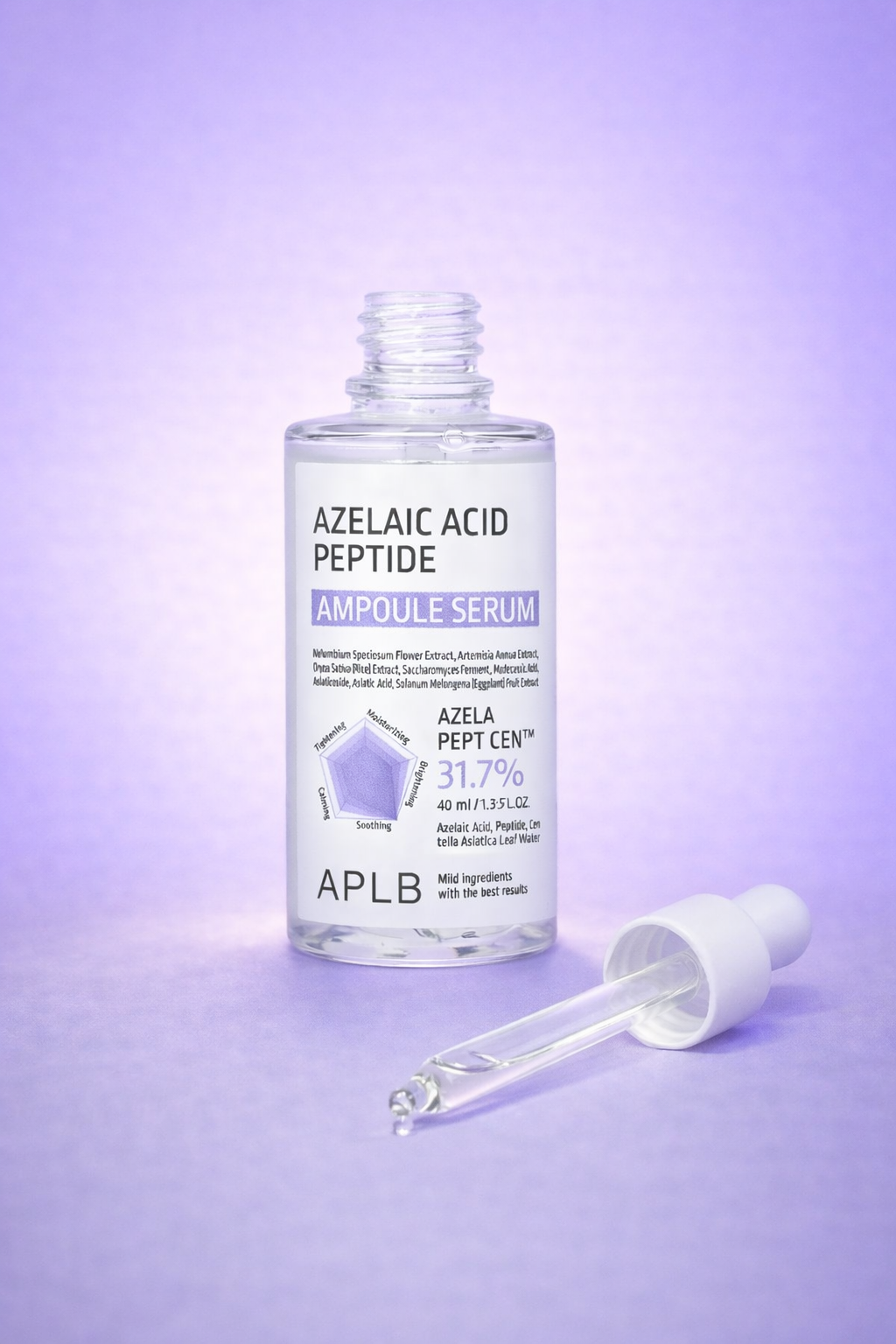
APLB Azelaic Acid Peptide Ampoule serum was a product recommended by Dr. Sam Ellis who is the founder of the skincare line Prequel and it had a 31.7% concentration of AZELA PEPT CEN, which I originally thought was a fancy way of saying Azelaic Acid, it is not!
Key Ingredients
AZELA PEPT CENT is a trademarked formula consisting of a mix of Azelaic Acid, Peptides and Centella Asisatica. Even though this serum has 31.7% AZELA PEPT CENT, based on my research it looks like Azelaic Acid only makes up around 1%-3% of the serum.
The other great ingredients in this serum include… Every moisturising ingredient you can think of such as beta-glucan, allantoin, panthenol, glycerin, squalene, propylene glycol and sodium hyaluronate.
Fragrance free and non-comedogenic.
Pros
- lightweight, no pilling
- incredibly moisturising and gentle
- very affordable
Cons
- low concentration of azelaic acid even though Azelaic Acid is mentioned in the product name
- did not see any changes to skin texture or reduction in redness
What Percentage of Azelaic Acid Is Effective?
Suitability
- sensitive or reactive skin
- beginners to azelaic acid
- people wanting hydration + soothing
- moderate acne
- rosacea flare-ups
- pigmentation concerns
- anyone expecting clinical-level azelaic acid results
Use
When to use: Can be used day or night. Azelaic Acid does not make you more sensitive to the sun, however it can cause skin irritation given that it is an active ingredient. The low concentration means that this is highly unlikely and as long as you wear sunscreen it should be fine.
What ingredients to use it with: Moisturising and soothing products that contain ingredients such as ceramides, niacinamide, beta glucan and snail mucin. As with any active ingredient it is recommended to patch test before using this serum regularly, especially for those with sensitive or reactive skin.
What ingredients not to use it with: Other harsh actives, however given the low concentration of Azelaic Acid you can probably get away with it. Ideally, don’t use it in combination with exfoliating products that have BHAs, AHAs and strong actives like Retinoic Acid and Vitamin C.
Final Comments
Overall the Azelaic Acid Peptide Ampoule Serum from APLB was okay. It had a great ingredient list, the texture was perfect but if you expect to experience the benefits of Azelaic Acid you will be disappointed. This is why I won’t be repurchasing it.
Studies support that concentrations between 10-15% are most effective for reducing redness and acne while remaining gentle enough for sensitive skin. Using lower concentrations such as 1-3% in this serum may provide hydration and mild soothing benefits but is unlikely to deliver measurable improvements in redness or texture.
I would recommend this product to people with dry, sensitive skin and looking to start incorporating Azelaic Acid into their skincare routine. If you have already used an Azelaic Acid product with a 10% concentration or higher you may not notice any difference in your skin.
Other Comments
Summary of the 1 star reviews from popular online retailers:
- low concentration of Azelaic acid/ ineffective
- caused them to break out
- marketing regarding the azelaic acid concentration was misleading.
This blog is for informational purposes only and does not replace professional dermatological advice. Individual skin responses may vary.