file 0000000027e4720ba382ddcc393c0770
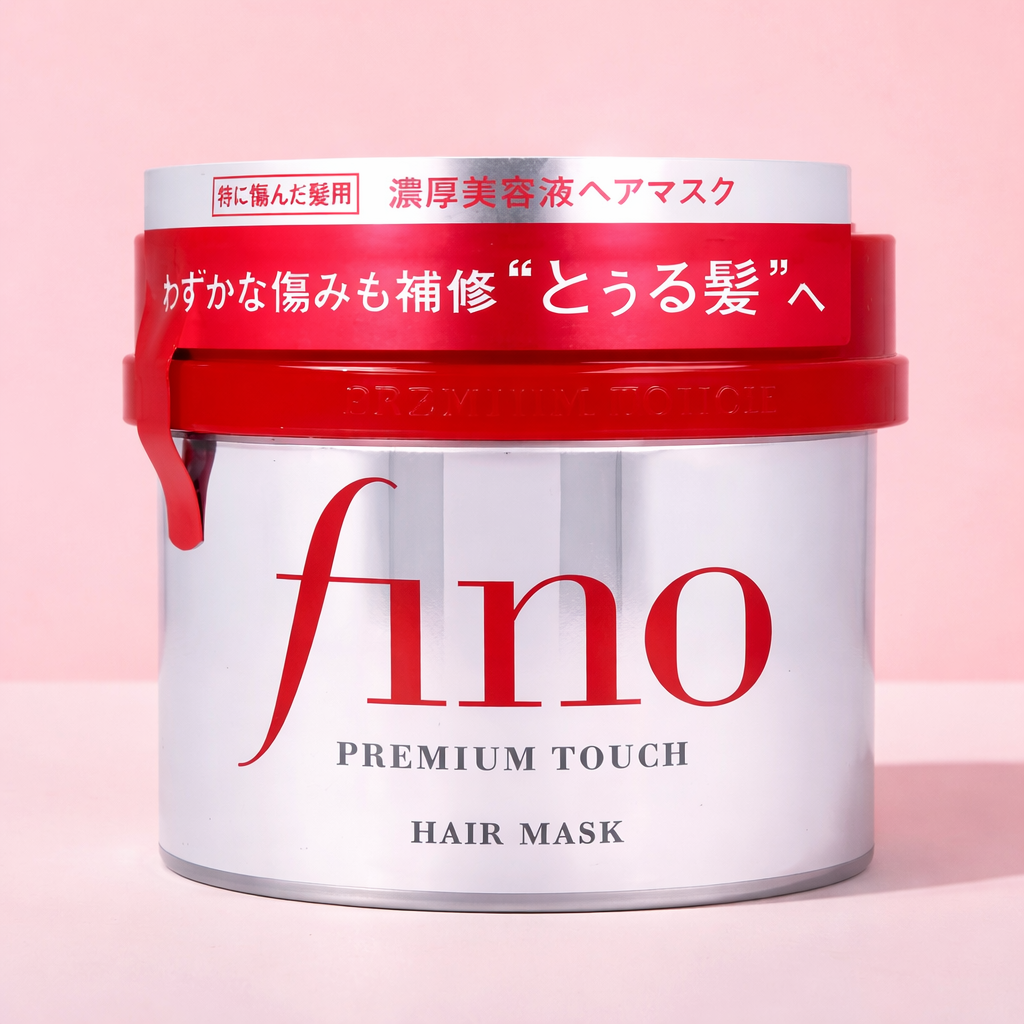
If you’ve spent any time exploring Japanese hair care, chances are you’ve come across the Fino Premium Touch Hair Mask. Known for its sleek silver tub and bold red lid, this affordable treatment has gained a loyal following for delivering soft, glossy, salon-like results at home.
 
But with growing awareness around ingredients, many people are now asking a more important question: Is it actually good for your hair, or just a temporary fix?
In this detailed review, we’ll break down exactly how it works, what’s inside, the pros and cons, and whether it deserves a place in your routine.

What Is the Fino Premium Touch Hair Mask?

The Fino Premium Touch Hair Mask is a rinse-off deep conditioning treatment designed to repair dry, damaged, and chemically treated hair. It’s particularly popular among those dealing with:
  • Bleached or colour-treated hair
  • Heat damage from straighteners or curling tools
  • Frizz and lack of shine
  • Tangling and rough texture
Unlike lightweight conditioners, this mask has a rich, dense texture that coats the hair thoroughly, helping smooth the cuticle and improve manageability almost instantly.
 
It may not be ideal if:
  • You have very fine or easily weighed-down hair
  • You strictly follow a silicone-free routine
  • You have a highly sensitive scalp

Key Benefits: Why It’s So Popular

1. Instant Visible Results
One of the biggest reasons this product has gone viral is how quickly it works. After just one use, many people notice softer, shinier, and more manageable hair. This makes it ideal if you want quick results before an event or after a damaging hair treatment.
 
2. Deep Conditioning for Dry Hair
The formula is packed with emollients and conditioning agents that help lock in moisture. If your hair feels brittle, rough, or overly dry, this mask can help restore that smooth, hydrated feel.
 
3. Frizz Control and Shine Enhancement
By smoothing the outer layer of the hair, it reduces frizz and enhances shine. This is especially beneficial in humid environments where hair tends to become unmanageable.
 
4. Affordable Alternative to Salon Treatments
Many deep conditioning masks with similar results come at a much higher price point. This product delivers comparable softness and smoothness at a fraction of the cost, making it accessible without sacrificing performance.

Ingredient Breakdown: The Good, The Bad, and The Misunderstood

This is where the conversation becomes more nuanced. The formula includes both highly effective ingredients and some that are often debated.

The Good Ingredients (That Actually Support Hair Health)
  • Royal Jelly Extract: Rich in amino acids, vitamins, and minerals, royal jelly helps nourish the hair and improve elasticity. Stronger, more elastic hair is less prone to breakage.
  • Sodium PCA: A powerful humectant that attracts moisture into the hair shaft. This helps maintain hydration and prevents dryness over time.
  • Glutamic Acid: An amino acid that supports the structure of the hair, helping improve strength and resilience.
  • Lipidure (Polyquaternium-64): This ingredient forms a lightweight protective film over the hair, improving smoothness and reducing friction without making hair feel overly heavy.
The Controversial Ingredients (And the Truth About Them)
  • Silicones (e.g., Dimethicone)
Concern: Build-up, potential to weigh hair down
 
Reality: Silicones are highly effective at smoothing hair, reducing frizz, and protecting against damage. They are especially beneficial for dry or damaged hair. The key is proper cleansing to prevent buildup.
 
  • Fragrance (Parfum)
Concern: May irritate sensitive scalps
 
Reality: Fragrance is widely used in hair care and is generally safe for most people. However, if you have a sensitive scalp, you may want to patch test first.
 
  • Alcohols
Concern: Can be drying
 
Reality: Not all alcohols are bad. Many in this formula are fatty alcohols, which actually help moisturize and soften the hair rather than dry it out.
 
  • Parabens (methylparaben, propylparaben, butylparaben, etc.)
Concern: These are used as preservatives. They are widely studied for potential endocrine activity. 
 
Reality:
✔️ Dose matters more than presence: Toxicity depends on how much enters your body and hair masks are rinse-off products, so exposure is limited
✔️ Skin absorption is low:
Most of the product sits on hair (dead keratin) and gets rinsed off quickly
✔️ Regulatory safety margin: Ingredients like parabens are only allowed at levels deemed safe by regulatory bodies. Even substances with “hazard potential” can be safe at cosmetic doses.
✔️ You’re exposed elsewhere anyway: Endocrine disruptors are found in food, water, clothes and air pollution. So a rinse-off hair mask is not your main exposure source.

Should you be worried?

You might want to avoid this product if:
  • You are trying to minimise cumulative exposure (e.g. hormonal conditions, pregnancy)
  • You prefer strictly “paraben-free” routines
But for most people:
The risk is low to negligible
Especially because:
  • It’s not a leave-on scalp product
  • It’s used occasionally
  • It’s rinsed out

I sit somewhere in between, I love the results from using this product but prefer to use products free of parabens. This is why it isn’t featured as my favourite product and I am still on the lookout for a good hair mask. But in the meantime I will continue to use this hair mask because the silkiness of my hair after a shower is just bliss. 

How It Compares to Other Hair Masks

Compared to more expensive salon brands, this mask focuses heavily on instant cosmetic results rather than long-term repair alone.

  • Pros vs salon masks: More affordable, faster visible results.
  • Cons vs salon masks: May rely more on coating ingredients rather than deep structural repair. If you stop using the product, the benefits will fade almost immediately.

That said, for most people, the difference in daily appearance is what matters—and this product delivers on that front.

Frequently Asked Questions

Can I use this every day?
It’s better to use it 1–2 times a week. Overuse may lead to buildup, especially if your hair is fine.
 
Will it repair split ends permanently?
No product can permanently fix split ends, but it can temporarily smooth and reduce their appearance.
 
Is it safe for colored hair?
Yes, and it can actually help maintain softness and shine in color-treated hair.
 
Does it cause buildup?
It can over time, which is why occasional clarifying is recommended.
 
Do you need to use it with a conditioner?
No, this can replace your conditioner. Use it after shampoo and then apply this product from the middle to  end of your hair. 

This blog is for informational purposes only and does not replace professional dermatological advice. Individual skin responses may vary.

By Rosie

Leave a Reply

Your email address will not be published. Required fields are marked *