
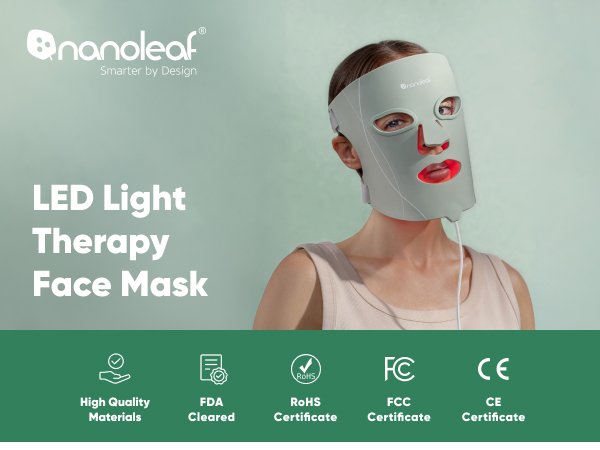
What Is LED Light Therapy (And Why Should You Care)?
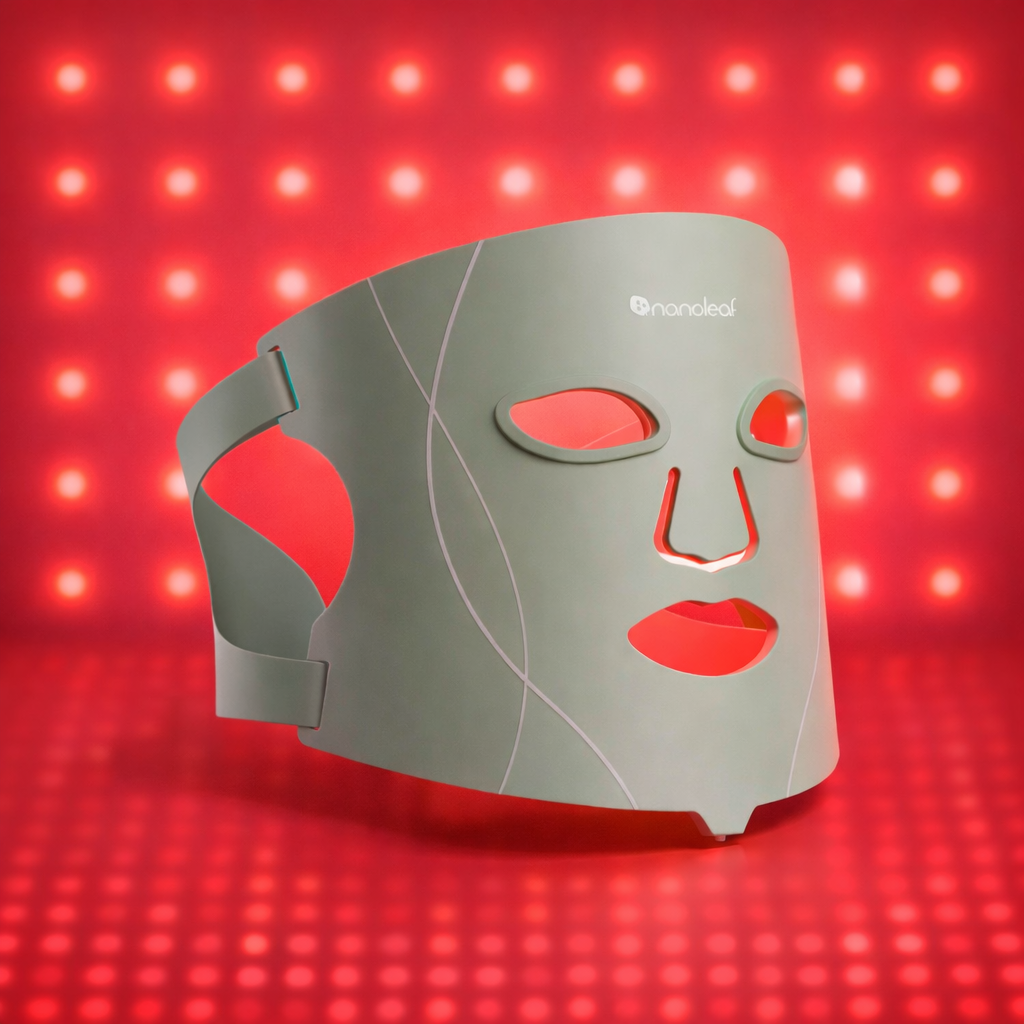
How the Nanoleaf Mask Works
- Red: ~640 nm + NIR 850 nm. Often linked with stimulating mitochondrial activity and collagen production.
- Blue: ~460 nm + NIR 850 nm. Generally used for targeting bacteria associated with breakouts.
- Green: ~525 nm + NIR 850 nm. Commonly marketed for pigmentation and calming redness.
- Cyan: ~460 nm + 525 nm + NIR 850 nm. Combines blue and green light. Commonly marketed for healing and calming inflammation.
- Yellow: ~640 nm + 525 nm + NIR 850 nm. Combines red and green light. Commonly marketed for evening skin tone and reducing redness.
- Purple: ~640 nm + 460 nm + NIR 850 nm. Combines red and blue light. Commonly marketed for reducing acne breakouts and acne scars.
- White: ~640 nm + 525 nm + 460 nm + NIR 850 nm. Combines red, green and blue light. Commonly marketed for enhancing nutrient absorbption.
- Wavelength selection includes clinically relevant red and NIR ranges that can stimulate collagen and cellular bioactivity.
- LED number & distribution helps provide consistent coverage, which improves the likelihood of measurable results compared with masks that have sparse diode placement.
Suitability
- You’re committed to long-term skin improvement
- You prefer non-invasive treatments
- You want something lower irritation than strong actives
- You value convenience at home
- You want dramatic, instant results
- You struggle with routine consistency
- You have light-sensitive conditions (always consult a professional first)
My Results
There are many other LED face masks on the market that are impressive, some offer higher irradiance outputs, more clinical backing, hard shell mask designs, or even more targeted wavelength pairings. Some premium devices may outperform the Nanoleaf in specific technical metrics. But here’s the reality: effectiveness doesn’t always require the most expensive or most hyped option. I chose the Nanoleaf mask because it delivers clinically relevant red, blue, and near-infrared wavelengths, has solid LED coverage, and provides controlled dosing, all at a price point that is significantly more accessible than many competitors. It may not be the most elite device in the category, but it sits comfortably in the “strong enough to get the job done without financially traumatising me” range. And in skincare, a device you can afford and use consistently will always outperform a luxury one that lives in your wishlist.
- Frequency of use: 5 times a week for 7 minutes alternating between red and yellow light
- Noticed changes: N/A
- Overall thoughts: Easy to incorporate into my routine, no visible changes to my skin but that is to be expected.
- Frequency of use: 5 times a week for 7 minutes alternating between red and yellow light. The device is programmed to run for 10 minutes so in the first 3 minutes I turn it on but leave it beside me because red light at lower intensities can be beneficial for the eyes.
- Noticed changes: Skin tone is more even and there is less redness. My skin does appear brighter but only on the days I use it, this effect might be temporary.
- Overall thoughts: Relaxing to use, I now look forward to using it at night and I’m surprised that I can already start to see the benefits!
- Frequency of use: no change to above
- Noticed changes: Less skin texture, no longer any redness flare ups when I’m overheated, just got out of the shower or working out.
- Overall thoughts: Definitely beneficial for the skin but positive effects only continue as long as you continue using the device. Thinking about getting a panel for my neck and rest of the body….
This blog is for informational purposes only and does not replace professional dermatological advice. Individual skin responses may vary.